Amargosa Valley Calls for Creation of an Ash Meadows National Conservation Area
THURS. MARCH 26TH, 2026 — AMARGOSA VALLEY, NV
On Thursday, March 26, the Amargosa Valley Town Board took a historic step toward protecting the lands and waters that sustain their community.
In a unanimous vote, the Town Board passed a resolution calling for the creation of an Ash Meadows National Conservation Area (NCA), a federal designation created by Congress to protect landscapes with important ecological, cultural, historic, and scenic values.
This decision did not happen in a vacuum. It reflects years of mounting concern from residents about the future of their water, their quality of life, and for the one-of-a-kind desert oasis that is Ash Meadows National Wildlife Refuge.
It also reflects something deeper: a growing recognition that temporary protections are not enough. Durable conservation measures are needed to safeguard this landscape for generations to come.
“This community has stood tall in the face of threats to their town and to their water again and again over the last few years,” said Amargosa Conservancy Executive Director Mason Voehl. “In calling for the designation of an NCA, they have made themselves clear: protection for Ash Meadows and for every form of life in this desert can’t wait. We’ll stand with them on this, every step of the way.”
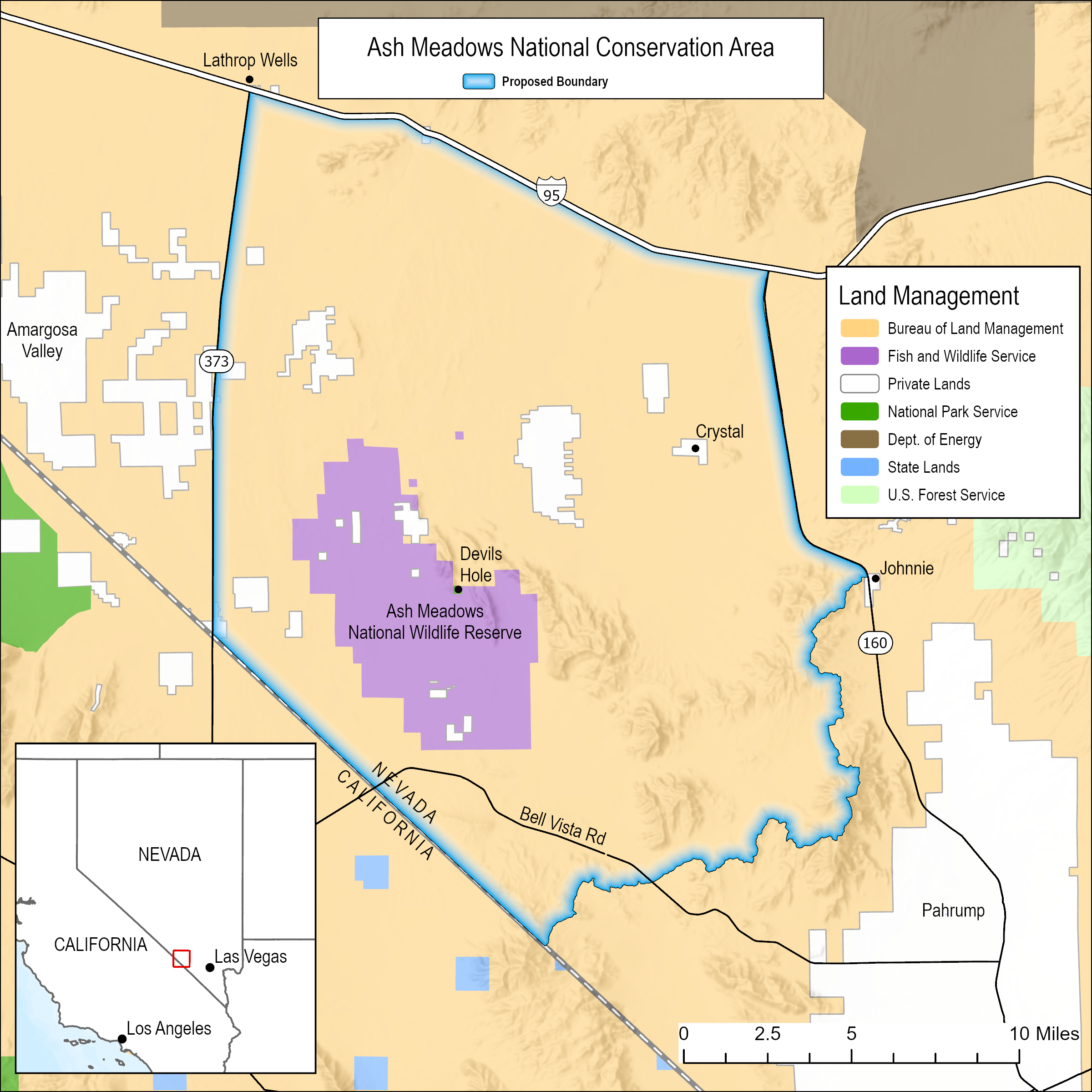
The resolution describes a conceptual NCA area entailing roughly 186,000 acres of lands managed by the Bureau of Land Management to be considered for potential designation. Such a designation would only apply to BLM lands, and would not affect ownership or management of private or other public lands within the defined boundary.
A Community Standing Up for Its Water
Ash Meadows National Wildlife Refuge is one of the most extraordinary desert landscapes in North America. Its springs support rare and endemic species found nowhere else on Earth. Its waters sustain wildlife, agriculture, and rural communities in one of the driest regions in the United States.
But those waters, and the ecosystems and livelihoods that depend on them, are increasingly under pressure.
In recent years, proposals for mining, industrial development, and large-scale energy infrastructure have raised alarm among Tribes, local residents, and conservation advocates alike. These proposals have underscored a simple truth: without strong, lasting protections, the future of this landscape remains uncertain.
The Amargosa Valley Town Board’s resolution signals a shift toward proactive protection. Rather than reacting to threats one by one, the community is calling for a comprehensive framework that safeguards the region’s natural and cultural resources, balances renewable energy generation, and preserves opportunities for responsible use of public lands.
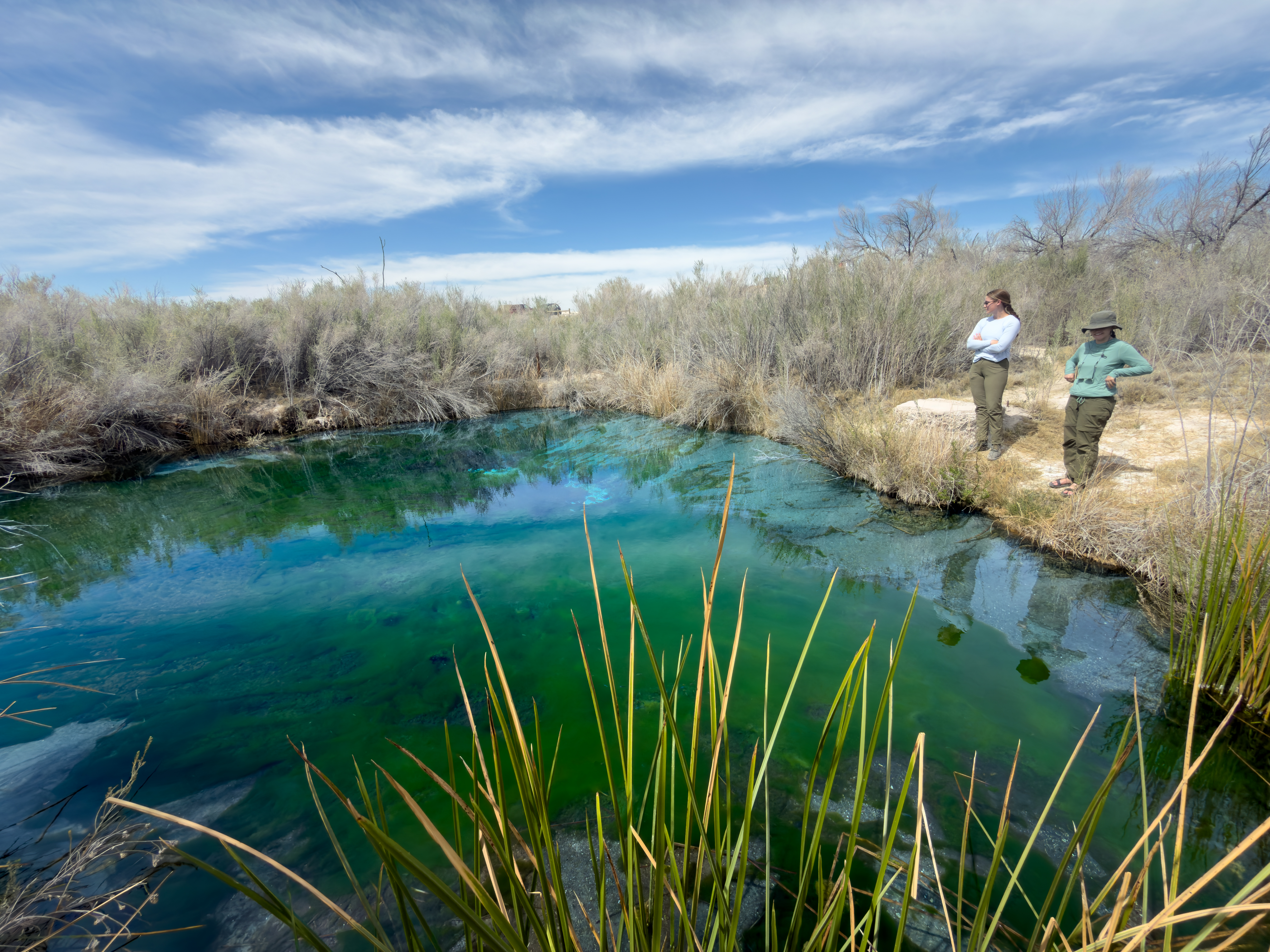
Fairbanks Spring, Ash Meadows National Wildlife Refuge — Mason Voehl
Temporary Protections Are Under Consideration
At the federal level, an important action is already underway.
The U.S. Department of the Interior is currently considering a proposed mineral withdrawal covering public lands in Amargosa Valley. If finalized, this withdrawal would temporarily close up to 309,000 acres of BLM lands in the Amargosa Valley to new mining claims for up to 20 years.
This action would represent an important step forward. It would provide meaningful short-term protections for groundwater resources, wildlife habitat, and rural communities while the federal government evaluates long-term management options.
But a mineral withdrawal is, by design, temporary. Even if finalized, withdrawals typically last for a fixed period of time unless renewed or replaced by more permanent protections. Local residents, Tribal governments, and community leaders have repeatedly voiced that temporary measures alone are not enough to secure the future of their water and their way of life.
That is why the call for a National Conservation Area has grown stronger. Community members have consistently emphasized that while the mineral withdrawal is necessary and important, durable conservation through a permanent land status change remains the ultimate goal.
Why a National Conservation Area?
A National Conservation Area offers a powerful tool for achieving long-term protection while maintaining flexibility for local communities.
Unlike some federal designations, NCAs are created through an act of Congress. Each one is tailored to the specific landscape it protects, with management direction written into law. This allows lawmakers and stakeholders to design protections that reflect local priorities, ecological necessities, and cultural values.
For lands surrounding Ash Meadows, an NCA could provide durable safeguards for groundwater-dependent ecosystems while preserving traditional uses, recreation opportunities, and community access to public lands. It also offers an opportunity to recognize and protect the deep cultural connections that Indigenous communities, including the Timbisha Shoshone Tribe and neighboring Tribes, have to this landscape and its waters.
What Happens Next?
Passing a local resolution is an important milestone, but it is only the beginning.
The creation of a National Conservation Area requires congressional action. In the months ahead, community leaders, Tribal governments, conservation organizations, and elected officials will work together to explore what an Ash Meadows National Conservation Area could look like and how it could best serve the region.
That process will involve listening to local voices, identifying priority areas for protection, and developing legislation that reflects the values of the communities who call this place home.
Amargosa Conservancy remains committed to supporting the community throughout this effort, providing scientific information, coordinating partnerships, and ensuring that decisions are grounded in the long-term health of the landscape.
Frequently Asked Questions
What is a National Conservation Area (NCA)?
A National Conservation Area (NCA) is a designation created by Congress to protect landscapes with important ecological, cultural, historic, and scenic values.
NCAs are part of the National Conservation Lands system, a network of special public lands managed by the Bureau of Land Management (BLM). These lands are recognized for their national significance and are managed to conserve their natural and cultural resources.
Read more about the National Conservations Lands system on our website
How is an NCA created?
An NCA is created through an act of Congress. This means federal legislation must be introduced, debated, and passed by Congress, and then signed into law by the President.
Each NCA is unique. The specific rules and protections for an NCA are written into the legislation that establishes it.
How are NCAs managed?
Most NCAs are managed by the Bureau of Land Management.
Management focuses on protecting key resources, such as wildlife habitat, cultural sites, water resources, and scenic landscapes, while allowing for compatible uses such as recreation, grazing, and scientific research.
Are NCAs the same as National Parks or National Monuments?
No. NCAs are different from National Parks and National Monuments.
National Parks are typically managed by the National Park Service and often emphasize preservation and visitor experiences.
National Monuments can be created by Congress or by presidential proclamation and may be managed by different federal agencies.
NCAs are created only by Congress and are typically designed to balance conservation with continued multiple-use management of public lands.
Why is an NCA being proposed for Ash Meadows?
Local leaders and community members have expressed growing concern about threats to groundwater, wildlife habitat, and rural livelihoods in the region.
A proposed mineral withdrawal currently under consideration by the Department of the Interior could provide important temporary protections. However, many community members have expressed the need for durable, long-term conservation through a permanent land status change such as a National Conservation Area.
Would an NCA restrict all uses of public lands?
No. Most NCAs are designed to allow continued uses that are compatible with conservation goals.
This can include recreation, grazing, cultural activities, and scientific research. Specific uses allowed within an NCA depend on the legislation that creates it.
How can community members stay involved?
Community voices are essential to shaping any future National Conservation Area.
Residents, Tribal governments, local leaders, and stakeholders will have opportunities to provide input as discussions move forward. Staying informed, attending meetings, and engaging in public dialogue will help ensure that any future designation reflects local priorities.
Stay in-the-know by following Amargosa Conservancy on Instagram and Facebook, and by subscribing to our monthly digital newsletter: The Bitter Water Bulletin
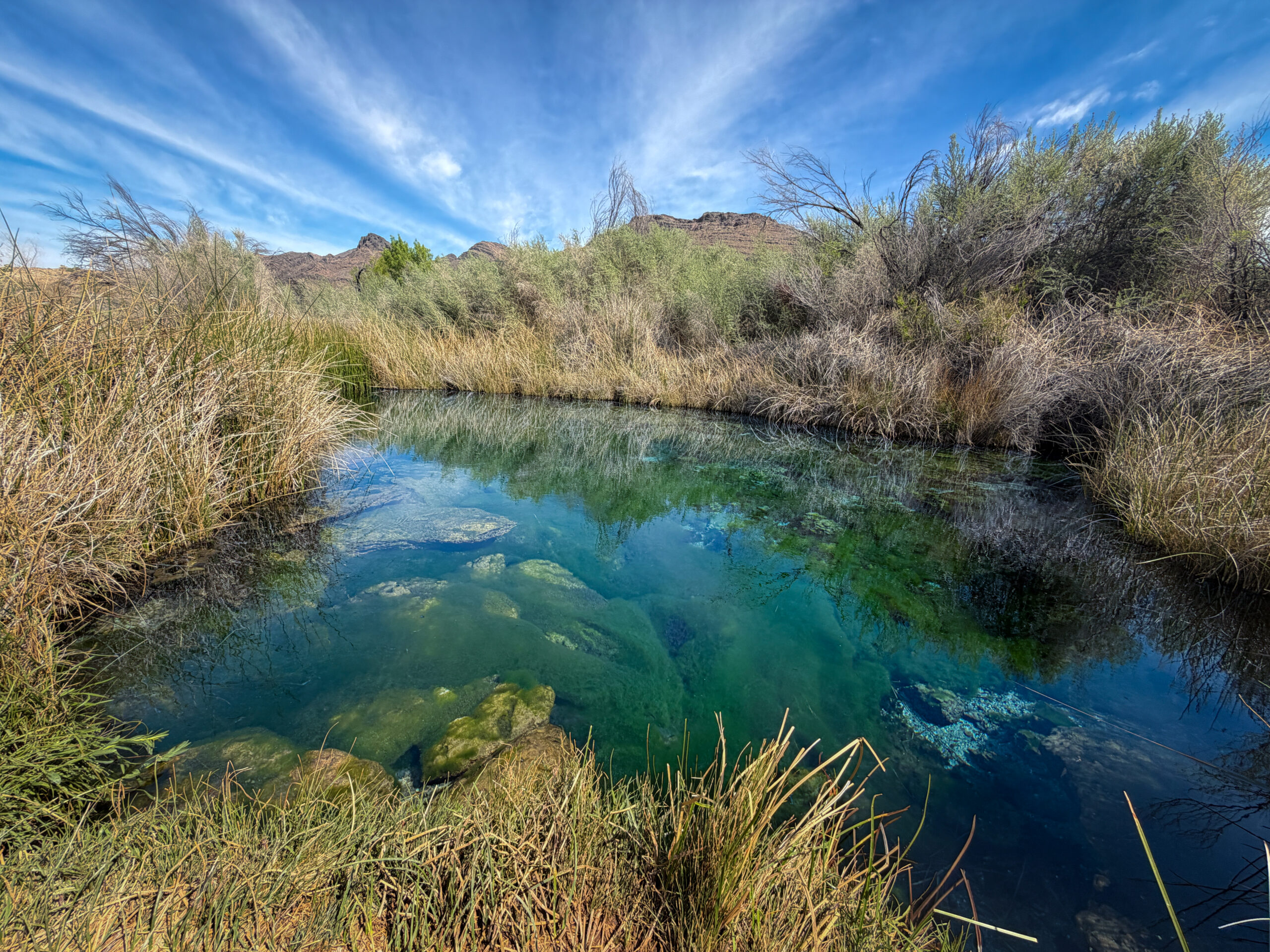
Kings Pool, Point-of-Rocks trail at Ash Meadows National Wildlife Refuge — Mason Voehl