By: Lindsey Stone, Plant Stewardship Coordinator
“Desert is a loose term to indicate land that supports no man; whether the land can be bitted and broken to that purpose is not proven. Void of life it never is, however dry the air and villainous the soil” – Mary Hunter Austin, The Land of Little Rain, 1903
“How does anything live here?”
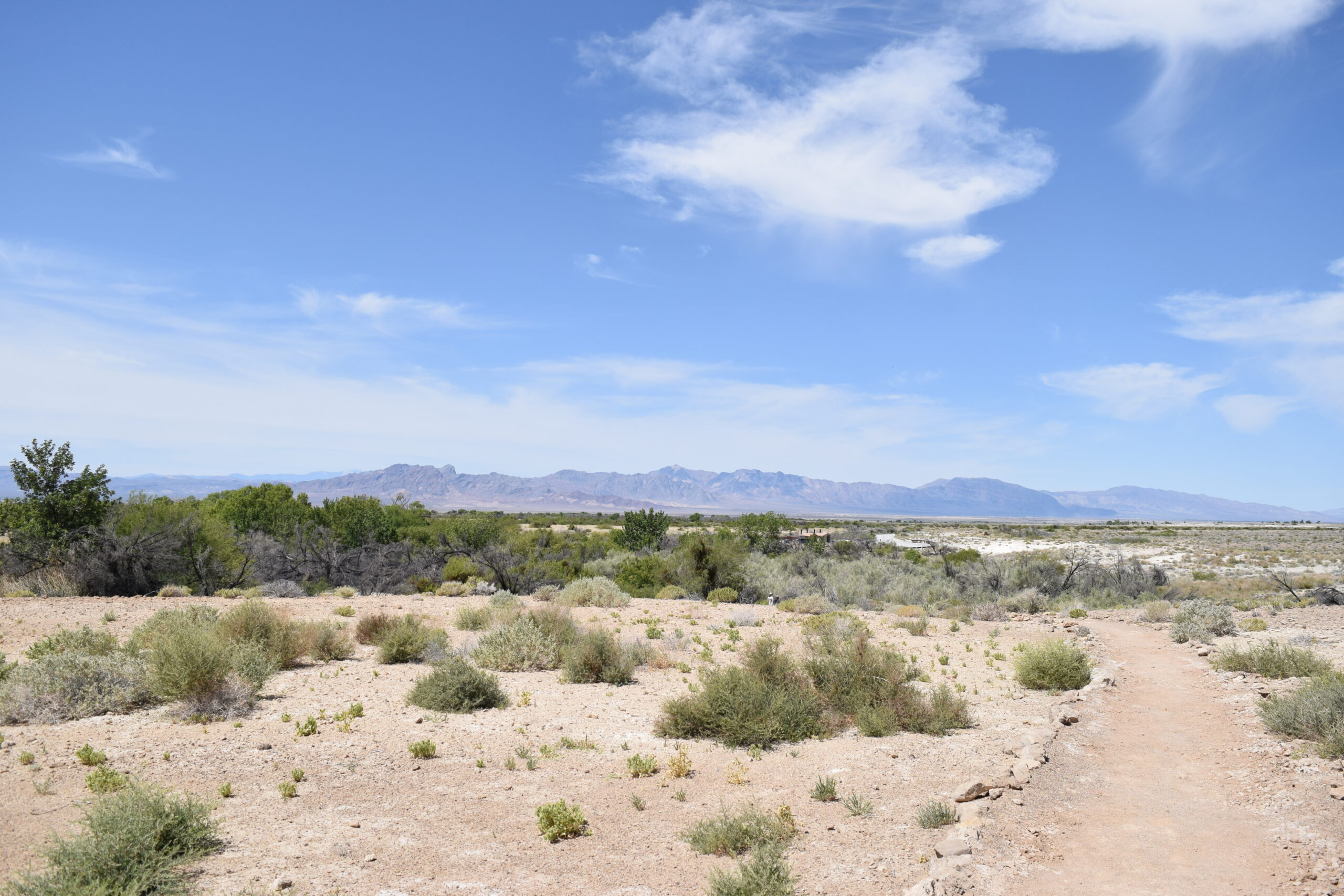
It’s a question often asked by those encountering the Mojave Desert for the first time. From a distance, this landscape can appear empty with vast stretches of pale soil and sparse vegetation, and of course, the unrelenting heat. The Mojave is indeed the hottest and driest place in North America, receiving only 2 to 6 inches of rain per year. It can appear desolate and maybe even lifeless.
But, if you take a closer look, the Mojave reveals something entirely different: a place defined by abundance. Life here is exquisitely adapted, deeply rooted, and, in many cases, found nowhere else on Earth.
Shaped for Survival
The Amargosa River Basin, nestled within the Mojave Desert, is home to a remarkable number of endemic species with over 100 species of plants and animals existing only in this region. It might be easy to think that these organisms are surviving against all odds, but they are actually living within the precise environmental parameters they evolved to occupy. In other words, this is not an extreme environment for them. It is home.
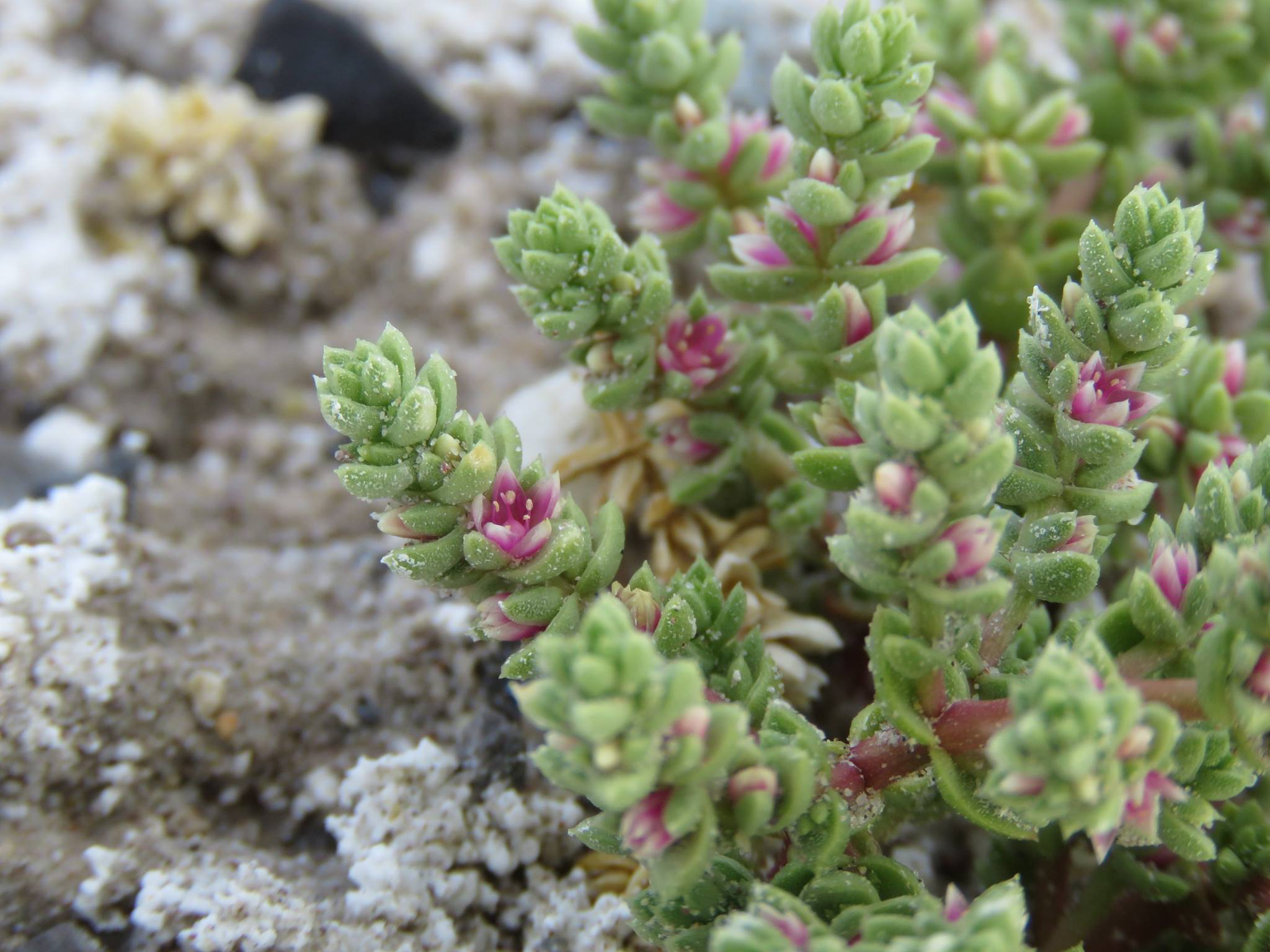
Amargosa niterwort (Nitrophila mohavensis) Photo: Naomi Fraga
Desert plants offer us examples of how organisms are adapted to conditions that might seem inhospitable. Three broad life-history strategies make desert environments livable: succulence, drought persistence, and drought avoidance.
Consider the endangered Amargosa niterwort, a halophytic (salt-tolerant) perennial forb that survives in a handful of alkali flats within the Amargosa River Basin. Shallow groundwater beneath the flats provides a dependable moisture source, which the plant stores in its thick, compressed succulent leaves. Succulence, also seen in plants like cacti and agave, is a common strategy for surviving arid desert conditions. The plant spreads through underground rhizomes that connect what may appear to be separate individuals aboveground. These rhizomes likely allow the niterwort to persist through changing water cycles by producing aboveground growth where sufficient water is available. When surface growth disappears, dormant underground structures can survive until conditions favor new growth. So, what might look fragile on the surface is instead a finely tuned system adapted to life in an environment defined by salinity and shifting groundwater availability.
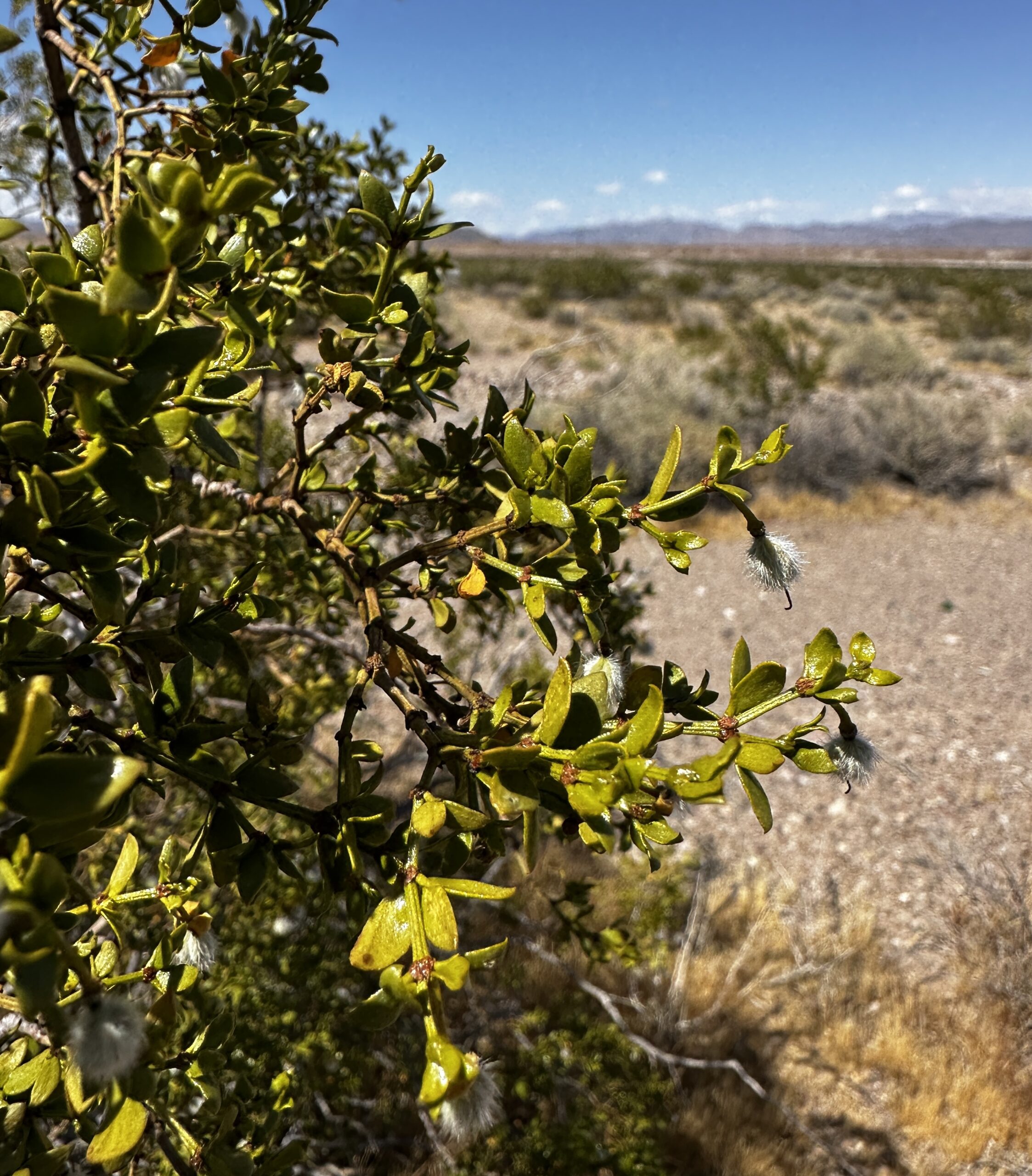
Creosote (Larrea tridentata) Photo: Lindsey Stone
Then there is the creosote bush (Larrea tridentata), one of the most iconic plants found throughout the Mojave. This plant is a perennial, evergreen shrub that can be seen at any time of the year. It has a deep taproot that allows it to access water in the absence of frequent precipitation. Its waxy and resinous leaves reduce water loss by limiting evaporation, allowing it to persist through prolonged drought. This resin is toxic to many herbivores, protecting these plants from being eaten and is also the source of their distinct smell, especially after it rains.
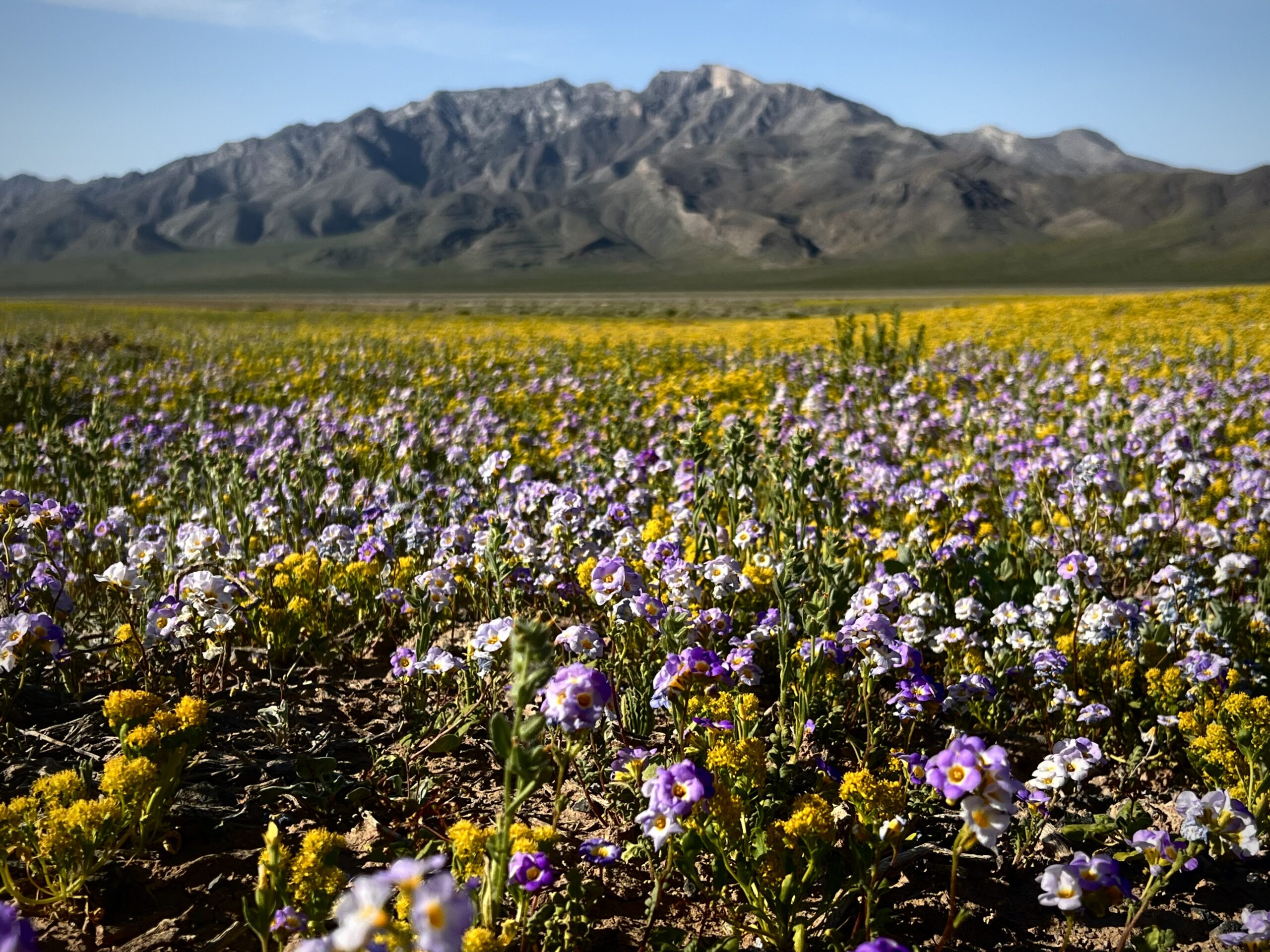
Wildflower bloom in Stewart Valley Photo: Mason Voehl
Even more ephemeral are the desert annual forbs that lie dormant beneath the soil for years at a time. These plants wait for the combination of rainfall and temperature to signal a favorable season. When those conditions align, they emerge en masse, briefly transforming the desert floor into a mosaic of color. These plants don’t have structures that allow them to persist in drought and emerge only when they have enough water. Their strategy is to avoid drought altogether. Those passing by may never see these transformations as they can be so short-lived. These plants exist mostly invisibly, with their seeds embedded in the soil, waiting for the right moment.
The Power of Perception
The word “desert” implies that we are talking about a place that is deserted. When we characterize deserts as barren or empty, they become easy targets for landscape transformation or extraction. We can see these consequences across the Mojave Desert, where there is increasing pressure from solar energy development, mining, and groundwater pumping. These pressures threaten to alter the delicate balance in place sustaining these ecosystems. While renewable energy is one tool we have for addressing climate change, its placement matters. Large-scale solar installations, for example, often require extensive land clearing, which can disrupt habitat and fragment populations of already specialized species. Similarly, mining operations can disturb soils that have taken centuries to stabilize and can alter water tables that support plant and animal life. Small changes can have cascading effects in a system where hydrology is tightly connected to timing and location.
Waste Not This Land
Reframing the desert as a place of belonging and abundance rather than emptiness is a necessary step toward conservation. The desert has everything it needs to be the home for so many different organisms. Alterations to water availability, soil composition, or land structure can disrupt the conditions that these species depend on.
We don’t need to transform the desert into a more hospitable place for humans. Rather, we would be well served in understanding our place within functioning intact desert ecosystems and reckoning with their finite tolerance for large-scale disturbance and extraction.
Seeing the Desert Clearly
So, the next time somebody questions the viability of the desert, it may be worth considering a different perspective. The desert is not a place where life clings on at the margins. These landscapes are complete ecosystems that have persisted through time, and they deserve careful consideration as we look to their future. Loss of habitat directly through destruction or indirectly through changes in groundwater threatens biodiversity, and when we are talking about endemic species, these losses could mean the disappearance of entire lineages– never to be replaced because their ecological niche exists only here.